Everything to know about the Big Island's most talked-about resort right now: the history, the rooms, the food, the beach (or lack of one), and honestly, who it's actually worth it for.
| Location | 72-300 Maheawalu Drive, Kailua-Kona, Big Island of Hawaii |
|---|---|
| From the airport | About a 10 minute drive from Ellison Onizuka Kona International Airport (KOA) |
| Opened | Originally 1966. Closed after the 2011 tsunami. Reopened July 1, 2023 as a Rosewood property |
| Size | 81 acres, 150 free-standing hale and kauhale (bungalows and suites) |
| Starting rates | Roughly $1,700 to $2,000 a night for an entry hale, climbing to $14,000 to $22,000 for family suites and around $40,000 a night for the presidential suites |
| Rating | 4 Stars, Forbes Travel Guide. 3 MICHELIN Keys |
The story, because it matters here
Most resorts don't come with a backstory, but Kona Village does, and it's a big part of why people care about this one specifically.
The original Kona Village opened in 1966 and was, for decades, one of the most beloved resorts on the Big Island: a barefoot, no-TV, no-phone kind of place where people came back year after year. In March 2011, the tsunami triggered by the earthquake in Japan hit the property and destroyed most of the oceanfront hale. It sat closed for over a decade.
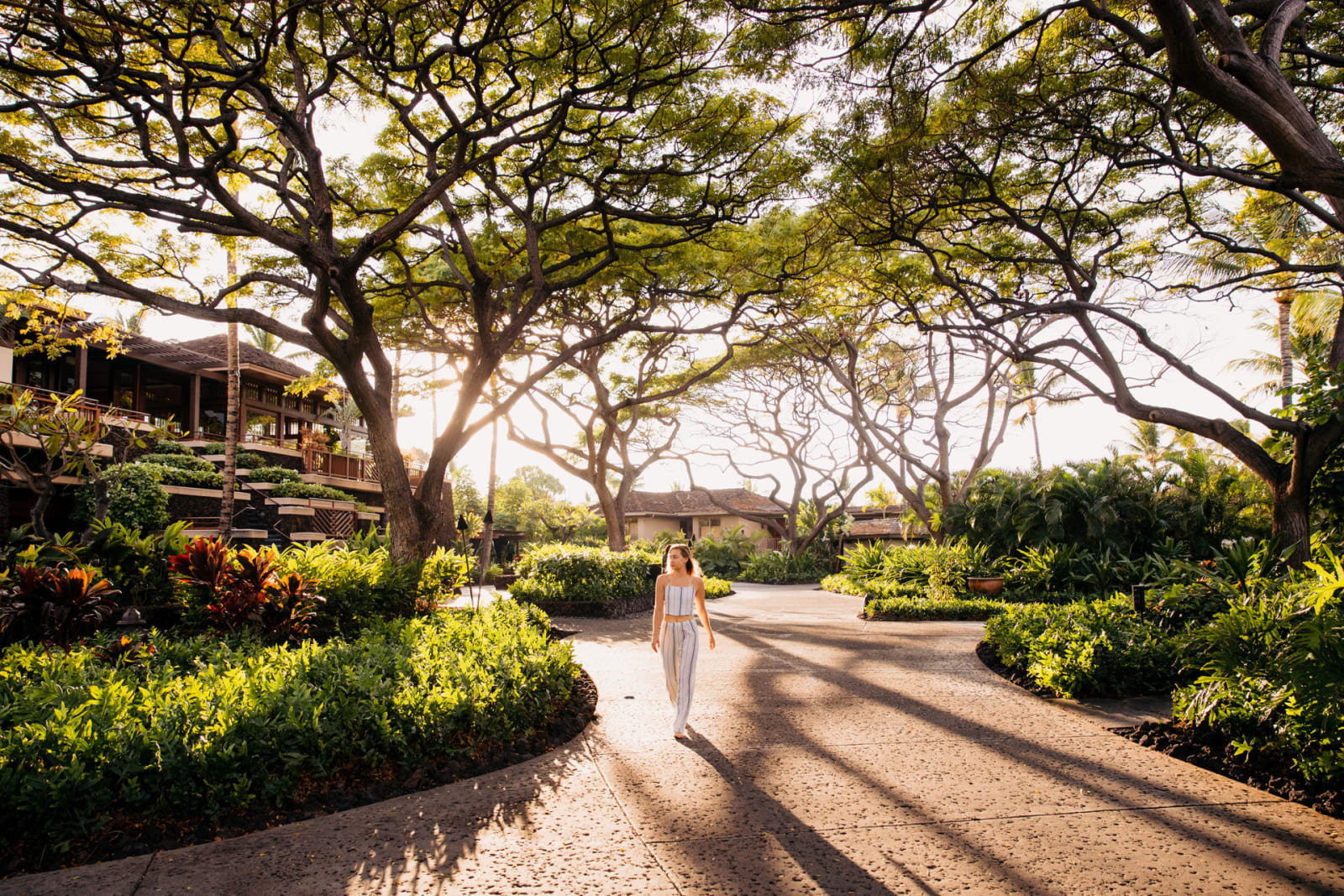
In 2017, Kennedy Wilson and Emerson Collective bought the land and spent years rebuilding it, working with a cultural advisory committee made up of lineal descendants of the area to protect the archaeological sites on the property and rebuild in a way that actually respects the history of the land, not just the brand. Rosewood took over management, and the resort reopened on July 1, 2023.
That history is why Kona Village doesn't feel like a resort that was built to look old. It feels like a place that was genuinely brought back.
Getting there
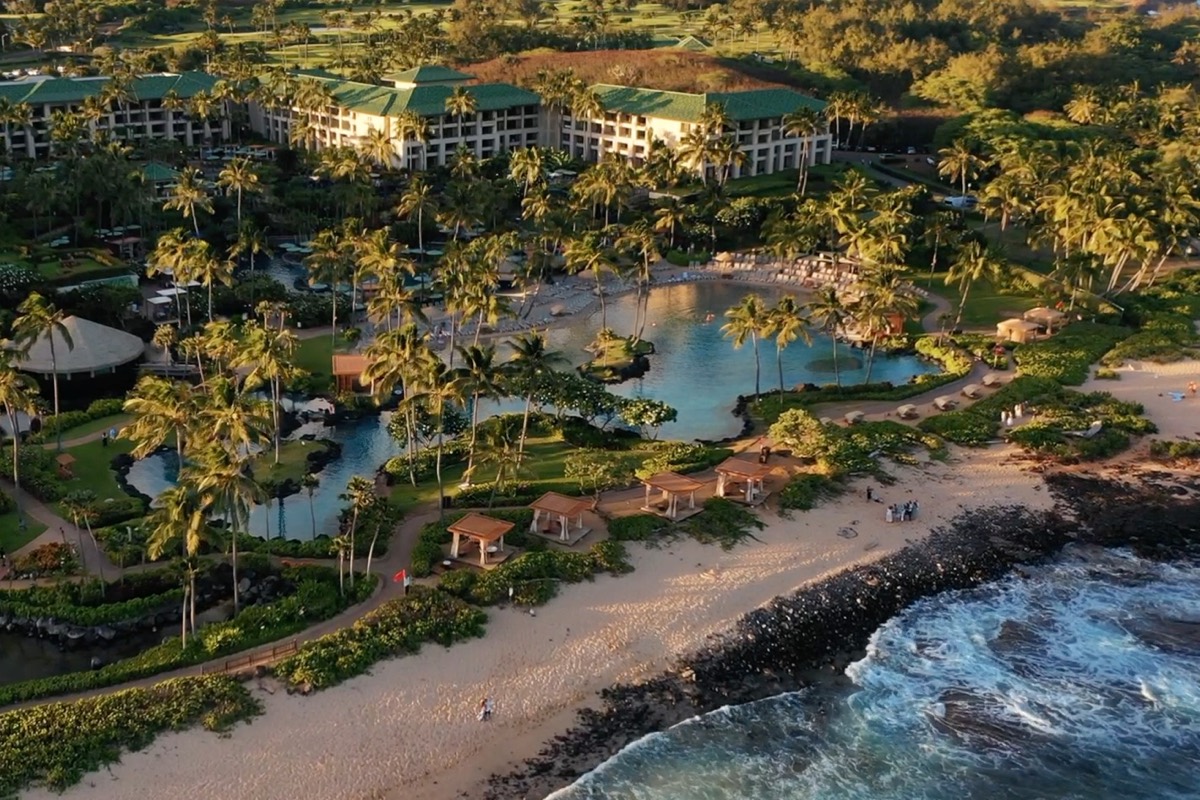
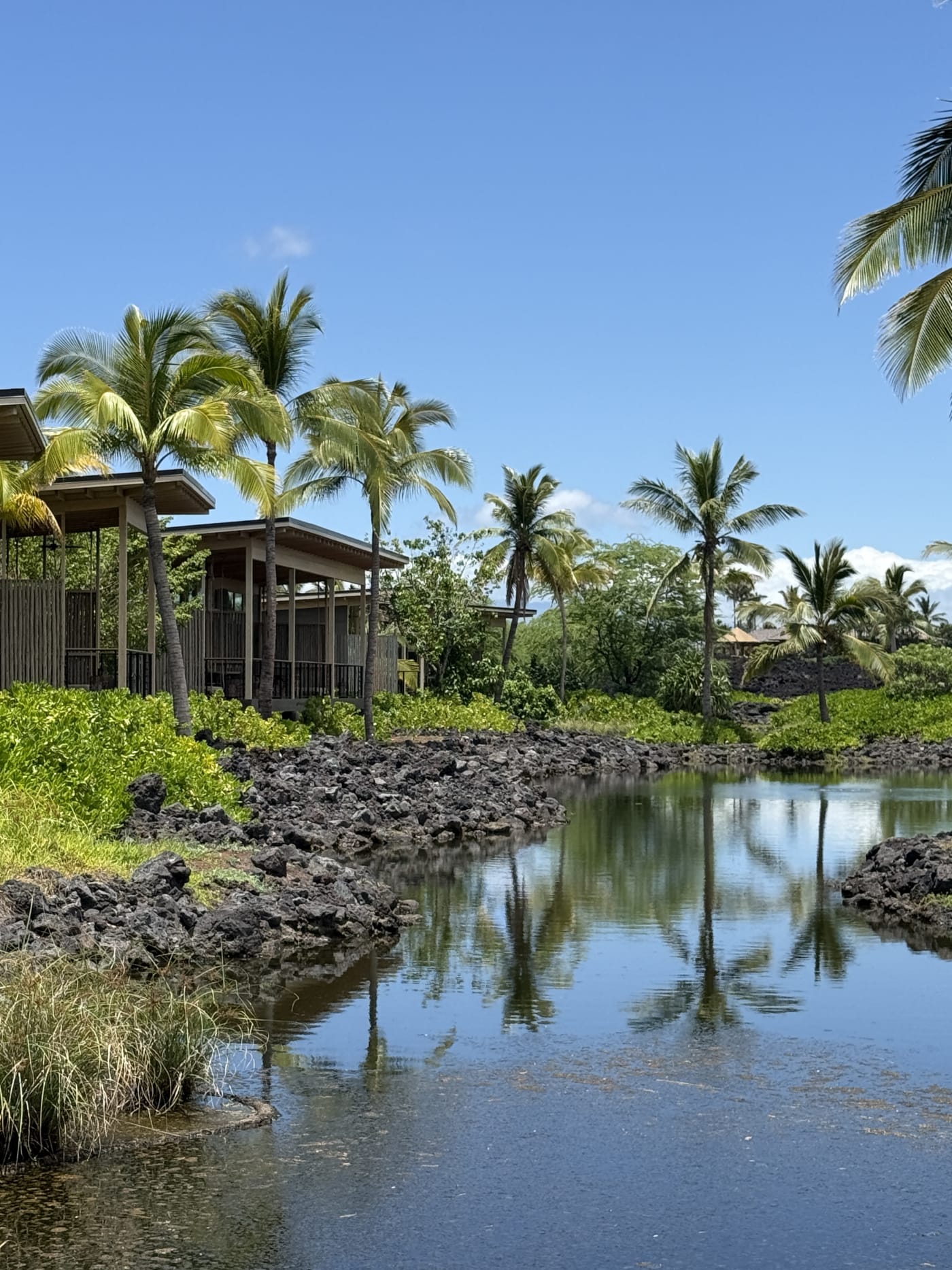
Kona Village sits on 81 acres along Kahuwai Bay, about a 10 minute drive from Kona airport (Ellison Onizuka Kona International Airport, code KOA). That's one of the real advantages of this property over some of the other Big Island luxury resorts: you land, and you're basically there. A taxi or rideshare from the airport runs around $30 to $40. The resort also arranges private transfers if you'd rather have that handled before you land, which is something I coordinate for clients.
The rooms: no TVs, and that's the point
This is the part people ask about most, so let's get specific.
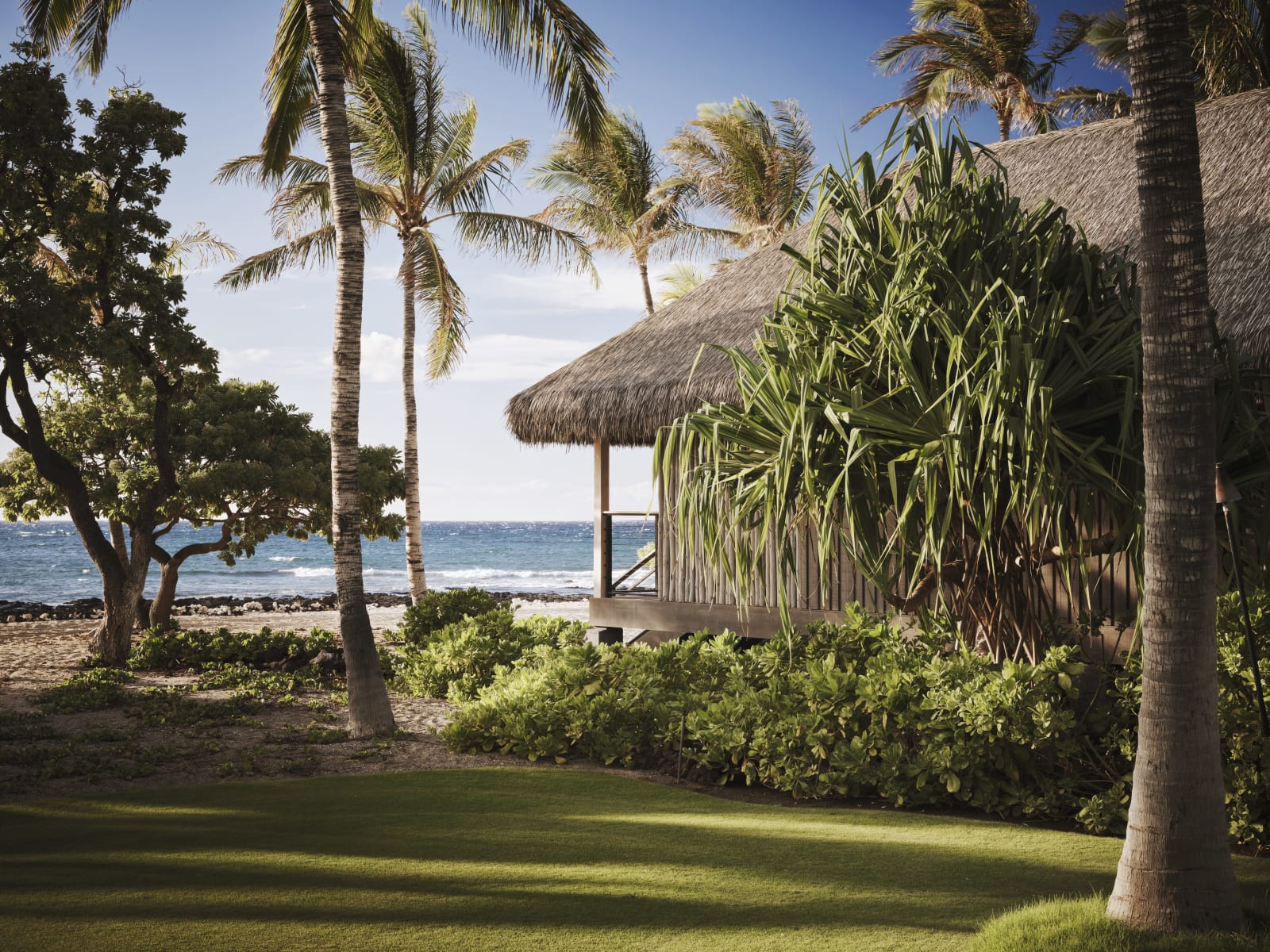
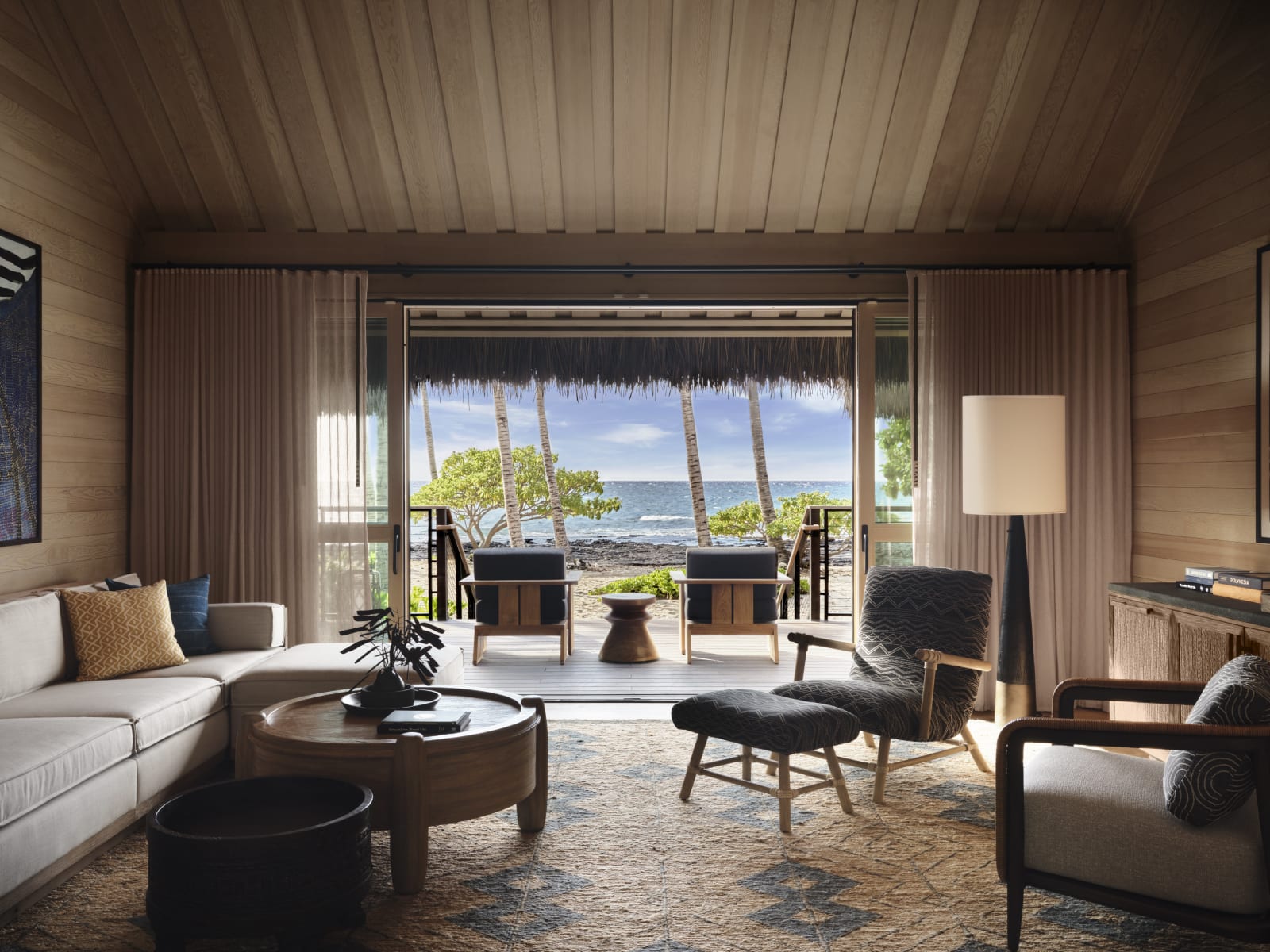
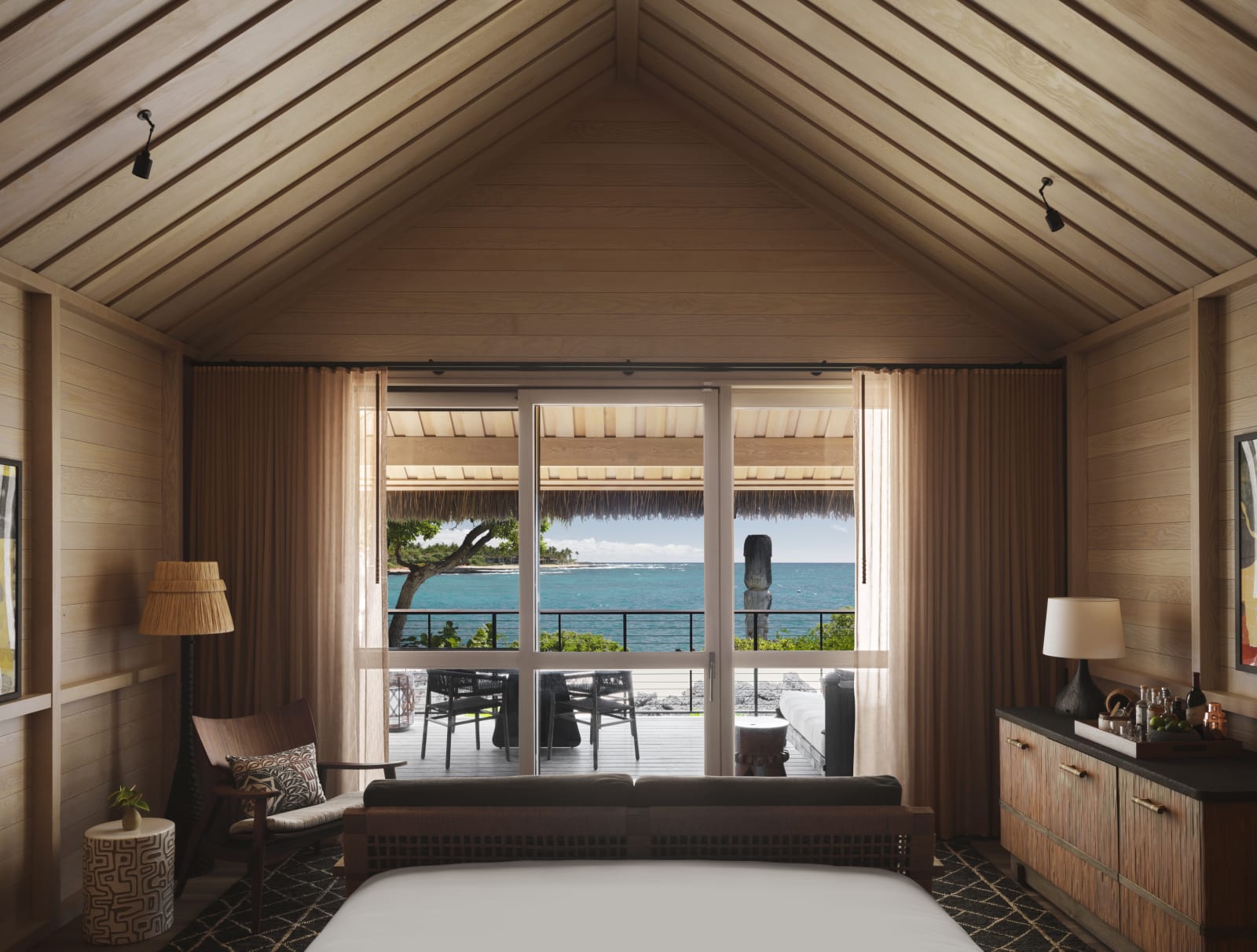
All 150 accommodations are individual, free-standing structures called hale (single units) and kauhale (multi-room suites), built with a thatched-roof, open-air design that's meant to evoke the resort's original 1960s architecture rather than a typical hotel wing. Room categories include:
- Garden and Tree Top King Hale: the entry-level category, still around 600+ square feet of combined indoor-outdoor living space, with a private lanai, daybed, and outdoor shower
- One and Two Bedroom Kauhale: suite-style units for couples or small families
- Ocean Front and Beach Front Black Sand Two Bedroom Kauhale: closer to the water, with black sand and ocean views
- Ocean Front Four Bedroom Maheawalu Kauhale: the larger family suite category
- Ocean Front Accessible Four Bedroom Kumukea Kauhale: accessible-designed four bedroom unit
- Ohana Pool Four Bedroom Kauhale: built around a private pool, best for larger groups
Room sizes range from about 600 to 2,420 square feet depending on category. Interiors lean warm and minimal: sustainably sourced Douglas fir floors and ceilings, king beds, a sitting area, and a striking black basalt bathroom with a freestanding soaking tub.
And yes, by design, there are no televisions in any of the rooms. That's not an oversight, it's the whole point of this property. If you're the kind of traveler who wants a screen in the room, that's worth knowing before you book. If you're the kind of traveler who's been wanting an excuse to unplug, this is basically built for you.
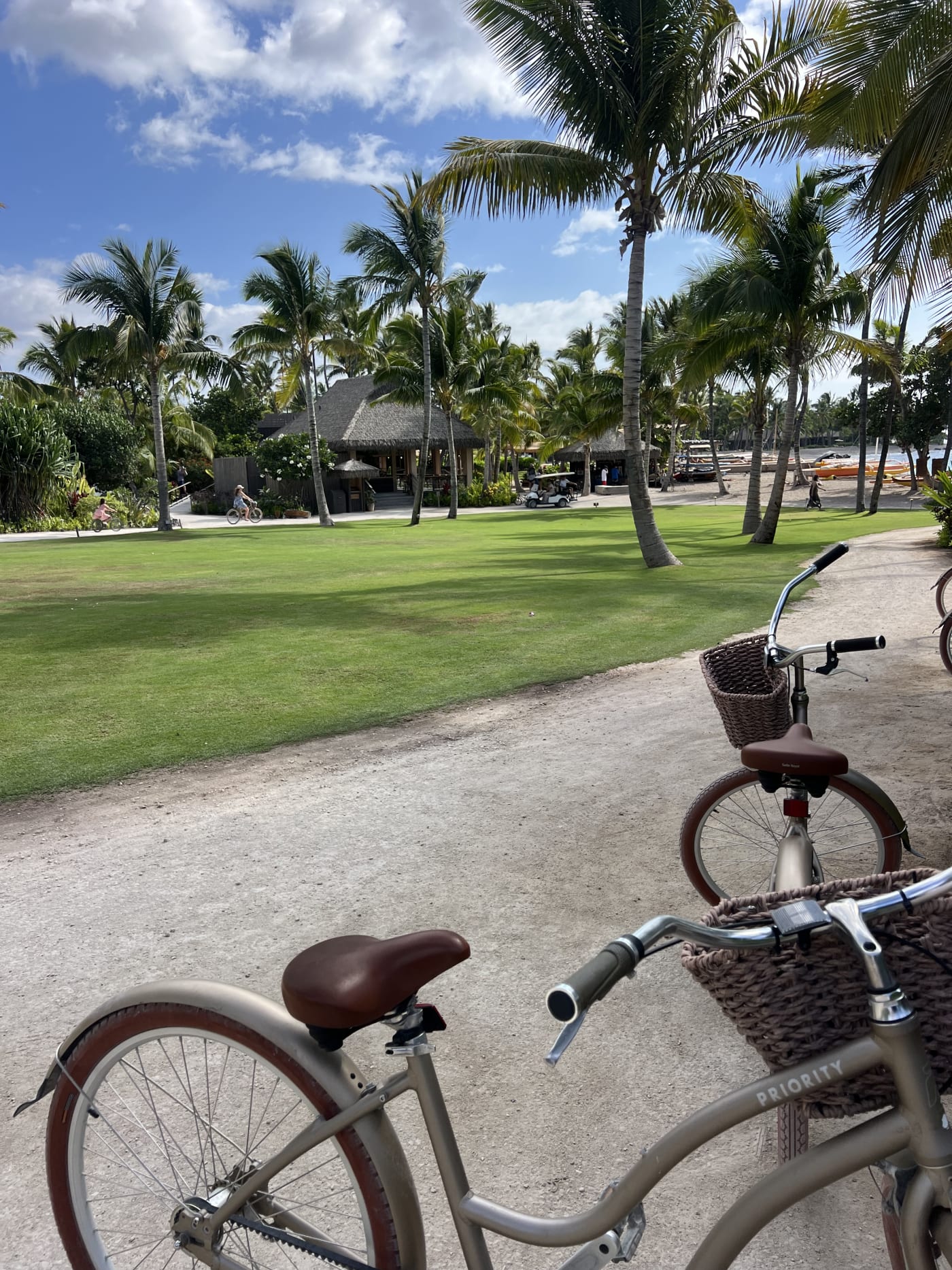
Every guest also gets complimentary use of a bicycle for the length of their stay, since the property is spread out enough that getting around on two wheels is genuinely useful, not just a nice-to-have.
The pools, the "beach," and the views
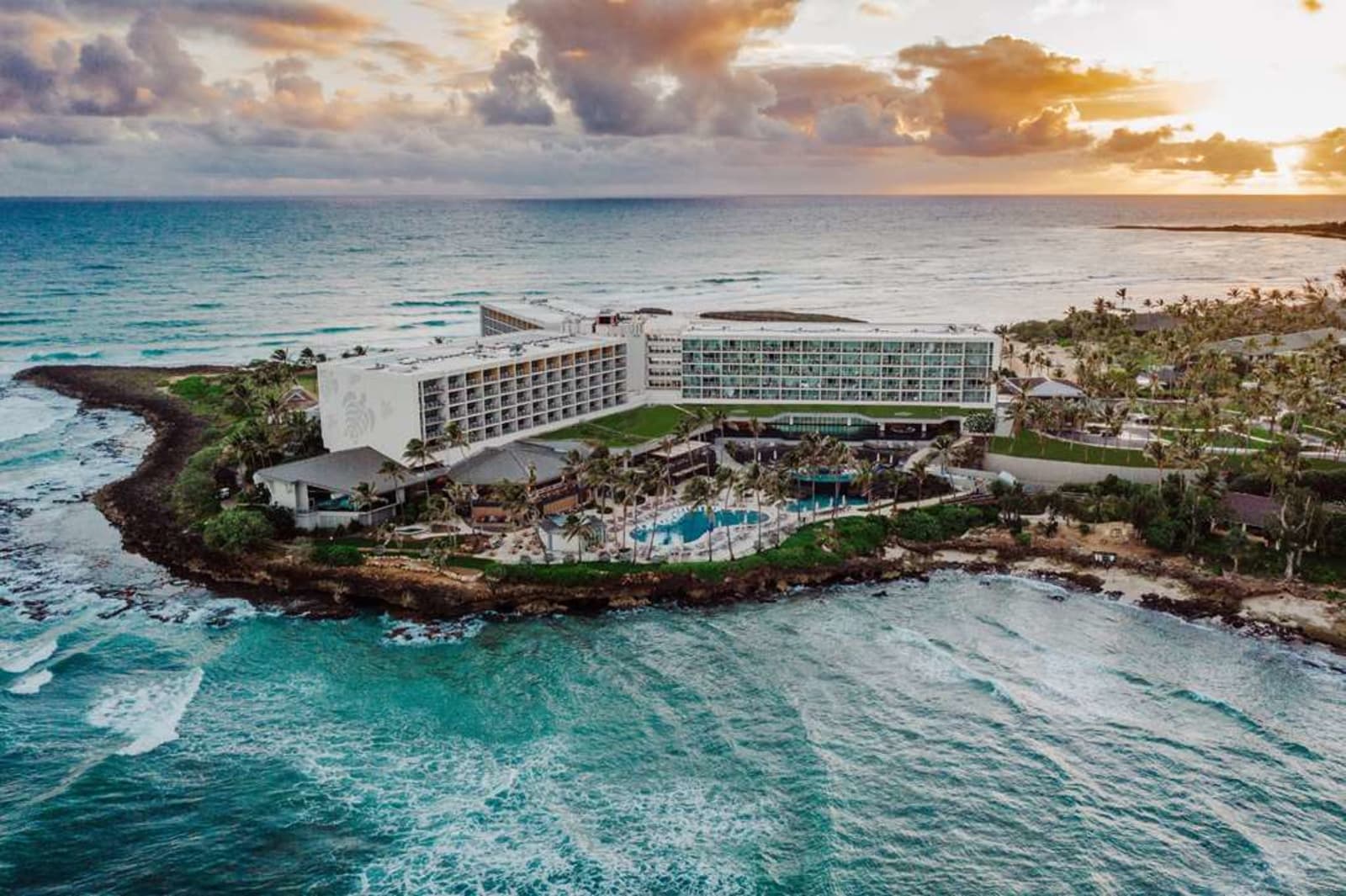
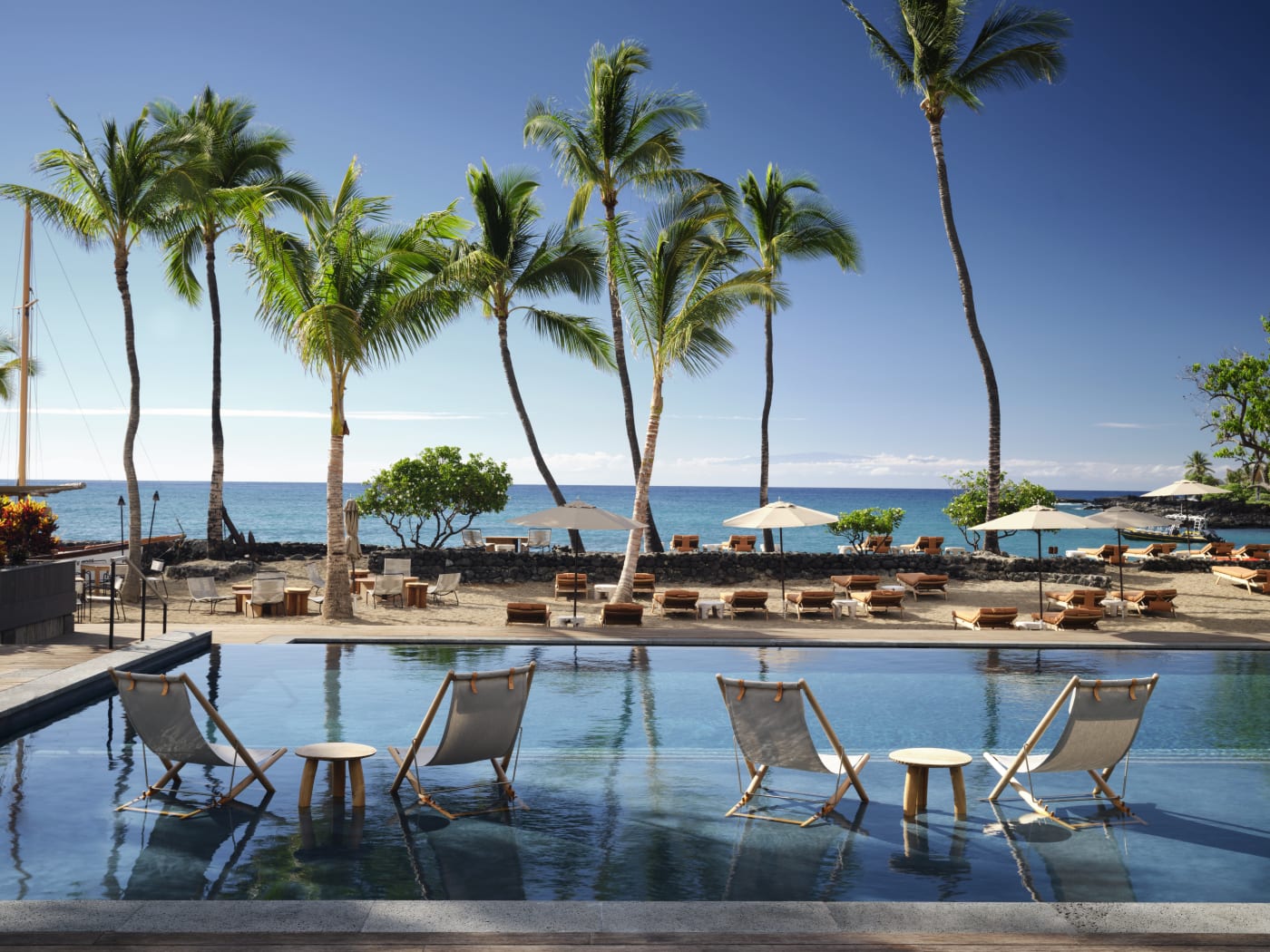
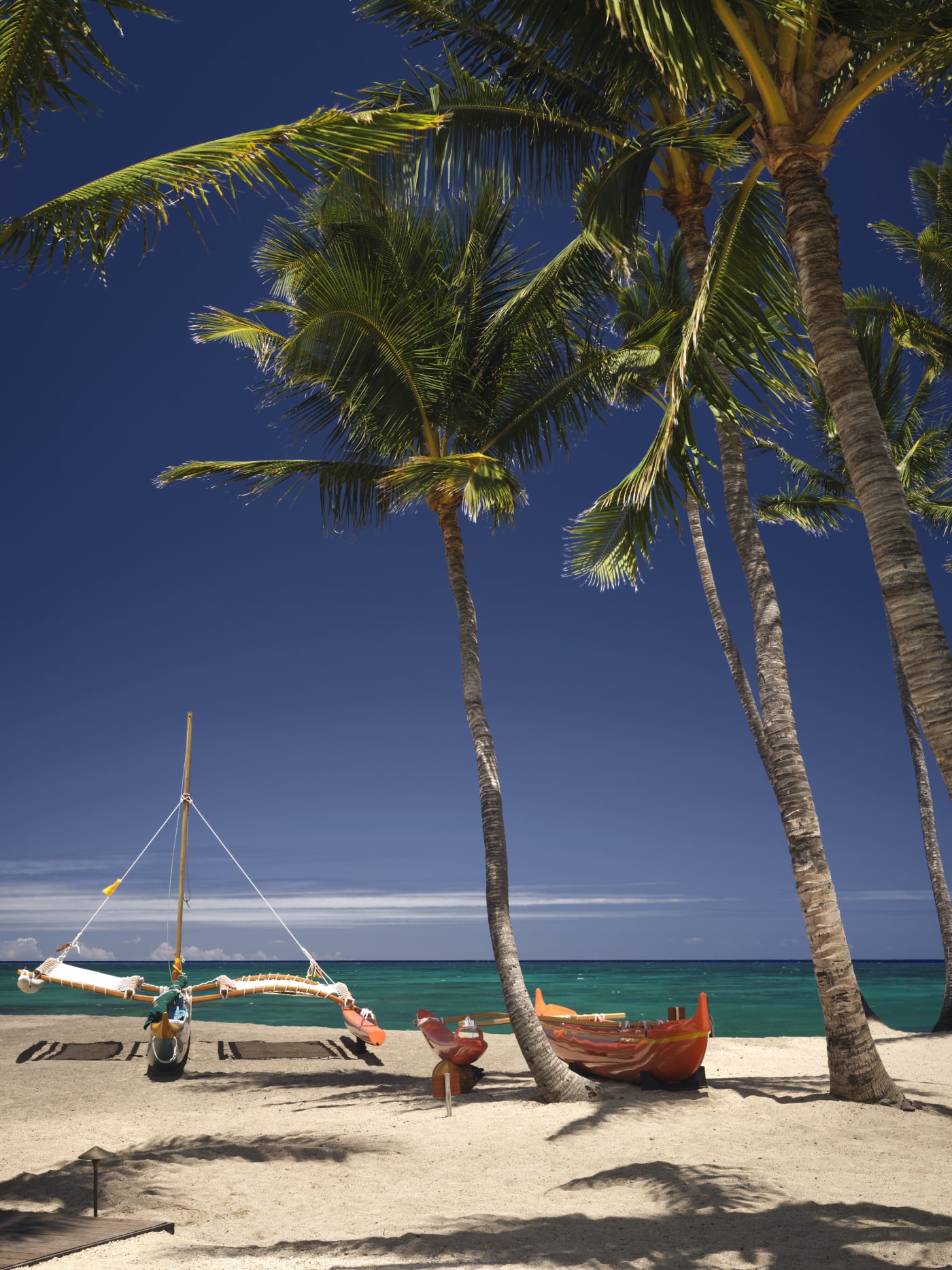
Here's where I want to be straight with you, because most articles about this hotel gloss over it: Kona Village does not have a traditional long, sandy Hawaii beach. What it has is a small black sand cove along Kahuwai Bay, good for a gentle swim, paddling, and snorkeling, but it's not the wide white-sand beach some people picture when they hear "beach resort." Most guests spend their pool time at the pools, not the shoreline, and that's genuinely fine, because the pools are exceptional.
There are four pools on property. The two standouts:
- Moana Pool: an infinity-edge pool overlooking the Pacific, lined with loungers and daybeds, and the spot for sunset
- Shipwreck Pool: the quieter, adults-oriented option, with a 25-meter lap lane and an infinity hot tub, plus complimentary cabana setup with cushions, towels, and water service
If ocean views and dramatic infinity pools are what you're picturing when you imagine this trip, you'll get them. If you're picturing walking barefoot on a mile of sand, temper that expectation a little, and I'm happy to point you toward a Big Island property that has more traditional beach if that matters more to you than it matters to have this specific resort.
Food and drink
Dining here leans into the resort's Hawaiian ranching and fishing roots rather than generic resort buffet food:
- Moana: the signature restaurant, Pacific Rim and Hawaiian-inspired, farm-to-table using ingredients grown on the resort's own on-site farm (Kahiko Māla'ai). Entrees generally run $25 to $58.
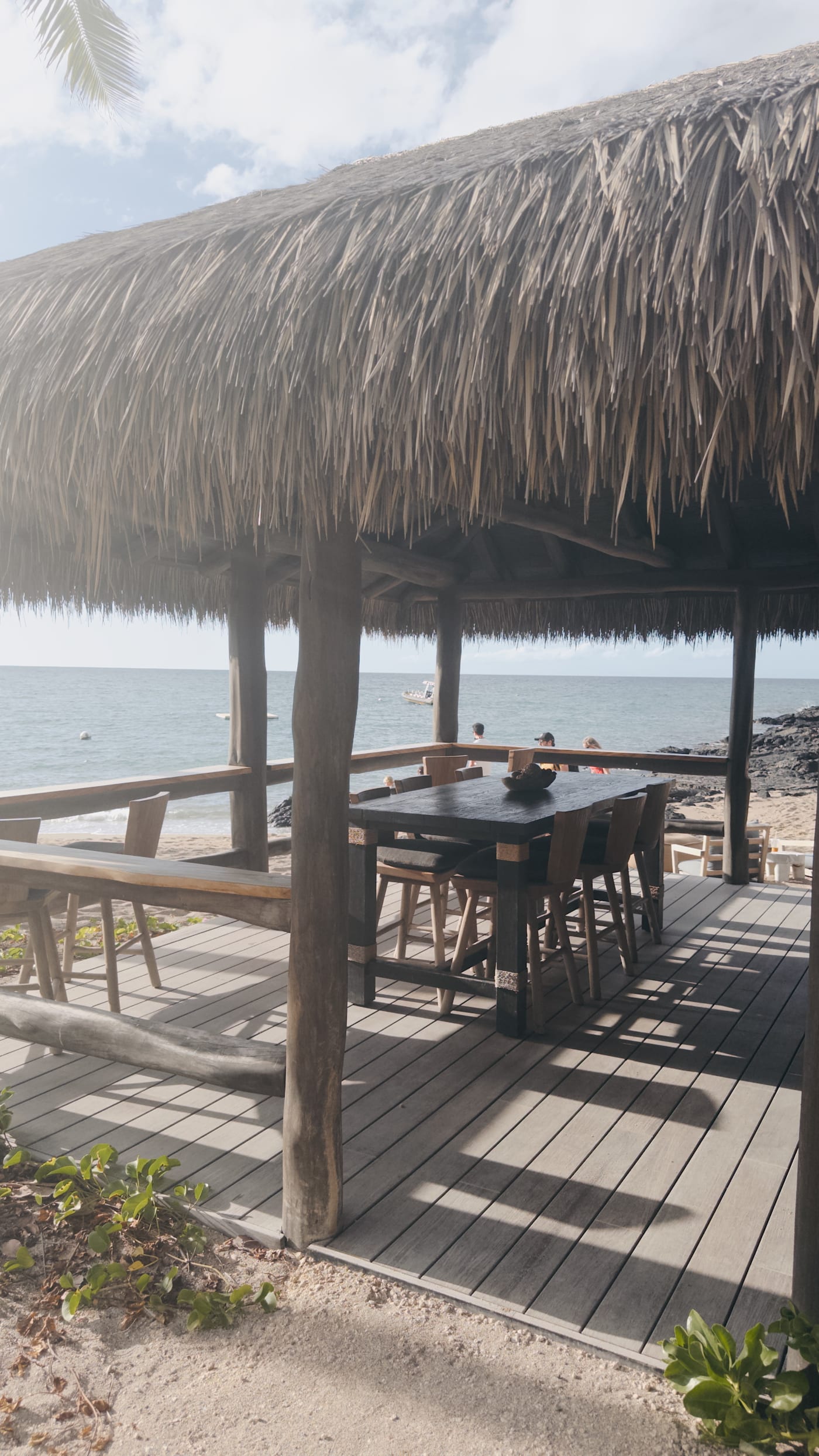
- Kahuwai Cookhouse & Market: a more casual, wood-fired, paniolo (Hawaiian cowboy) inspired spot for grilled meats and fresh seafood, plus a market for coffee and pastries.
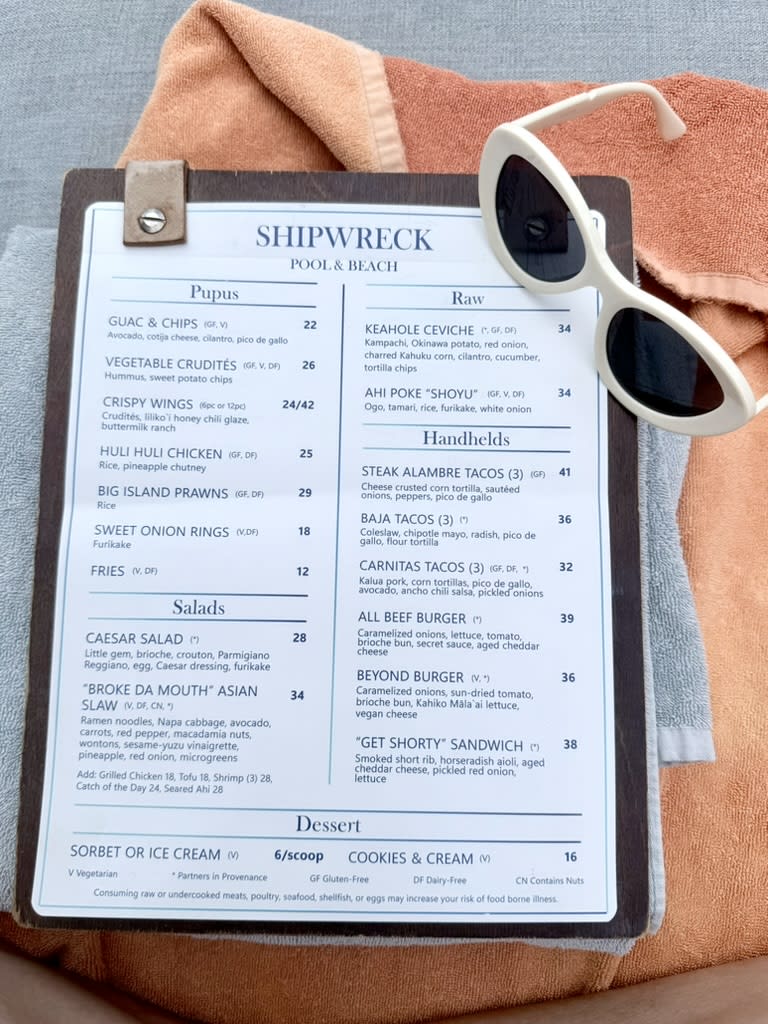
- Shipwreck Bar and Sushi: built into the resort founder's actual restored schooner. This alone is worth a visit even if you're not staying the night.
- Talk Story Bar: the sunset cocktail spot.
- Ulu Private Dining Room: for a more intimate, arranged dinner.
For entertainment, the resort runs a Thursday night Paniolo Night (a cowboy-themed dinner event, around $250 per adult, unlimited food and drink) and a traditional Wednesday luau. There's also a third-Thursday artisan market and regular live music at the Moana Cocktail Bar.
Spa, wellness, and activities
The Asaya spa is open-air, with hot and cold plunge pools, a sauna, a steam room, and treatments that include traditional Hawaiian lomi lomi massage. There's a fitness center with floor-to-ceiling windows and a dedicated yoga studio.
Beyond the spa, the resort's Kilo Kai ocean program runs sunrise outrigger canoe paddling, guided snorkeling, and sailing. Whale watching season (roughly December through April) adds another layer if your trip lines up with it. There's also tennis and pickleball, a cultural center with guided petroglyph tours (the property sits on land with real archaeological and cultural significance), palm weaving classes, and a kids club (Rosewood Explorers Keiki Club) if you're traveling with family.
What makes it worth the splurge
A few things separate this from "just another luxury Hawaii resort":
- The privacy and scale. 150 units spread across 81 acres means you're never fighting a crowd at the pool or restaurant. That's a real, felt difference from a 400+ room high-rise resort.
- The story. You're not staying somewhere new dressed up to look historic. You're staying somewhere that actually has decades of history, closed for 12 years, and was rebuilt with real cultural input rather than just a renovation budget.
- The no-TV, digital-detox design. This is either a dealbreaker or the entire reason to book, depending on who you are, and it's worth being honest with yourself about which camp you're in before you commit.
- It's genuinely sustainable, not just marketed that way. The resort runs on one of the largest privately owned solar microgrids in the state, with a real zero-waste commitment.
- The dining and cultural programming go deeper than typical resort activities. The on-site farm, the schooner bar, the petroglyph tours, the paniolo night: none of that is generic.
Who this is (and isn't) right for
This is one of my favorite Big Island recommendations for honeymooners, anniversary trips, and milestone celebrations where the couple genuinely wants quiet and seclusion over nightlife and options. It's also a strong pick for a multigenerational family trip if you book one of the larger kauhale, since the layout gives everyone their own space rather than adjoining hotel rooms.
It's probably not the right fit if a long sandy beach is non-negotiable for you, if you want a TV in the room, or if you're comparing it purely on price against other Big Island luxury properties, since Kona Village sits at the very top of that range.
Frequently asked questions
Is Kona Village good for couples or families?
Both, depending on the room category. The one and two bedroom hale suit couples well, and the four bedroom kauhale (especially the Ohana Pool Kauhale) work well for families or multigenerational groups who want everyone under one roof but with real separation.
Does Kona Village have televisions in the rooms?
No. It's an intentional part of the resort's design and philosophy, not an oversight.
What's the closest airport to Kona Village?
Ellison Onizuka Kona International Airport (KOA), about a 10 minute drive from the resort.
Does Kona Village have a real beach?
It has a small black sand cove suitable for swimming, paddling, and snorkeling, but not a long, traditional sandy beach. Most guests spend the bulk of their pool and lounging time at the resort's pools rather than the shoreline.
Is it worth the price?
If seclusion, cultural depth, and genuinely exceptional pools and dining matter more to you than a big beach or a lower nightly rate, yes. If you're mainly comparing on price per night against other Big Island resorts, this isn't the value pick, it's the splurge pick.
Should I book directly or through a travel advisor?
For a resort at this price point, there's no real downside to booking through an advisor. It doesn't cost you anything extra (I'm paid by the resort, not by you, for a hotel-only booking), and it means someone is checking for upgrades, credits, and perks on your behalf instead of you booking blind.
Skyline Escapes · Luxury Travel Design
Information in this article reflects publicly available rates, room categories, and preferred-partner terms as of September 2026. Rates, room availability, and perk terms change, so always confirm current details before booking.